Cloud computing sounds like one of those topics that only IT professionals need to understand. In reality, almost everyone touches the cloud every single day — through email, photo storage, streaming services, or online collaboration tools. This droven.io cloud computing guide was written to break that topic down in plain language, without burying you in jargon or assuming you already have a technical background.
Whether you run a small business, manage a growing team, or simply want to understand how modern technology actually works behind the scenes, this guide gives you a clear, practical starting point. By the end, you should feel confident enough to talk about cloud computing, evaluate your own options, and make smarter decisions about the tools you rely on.
What Cloud Computing Actually Means
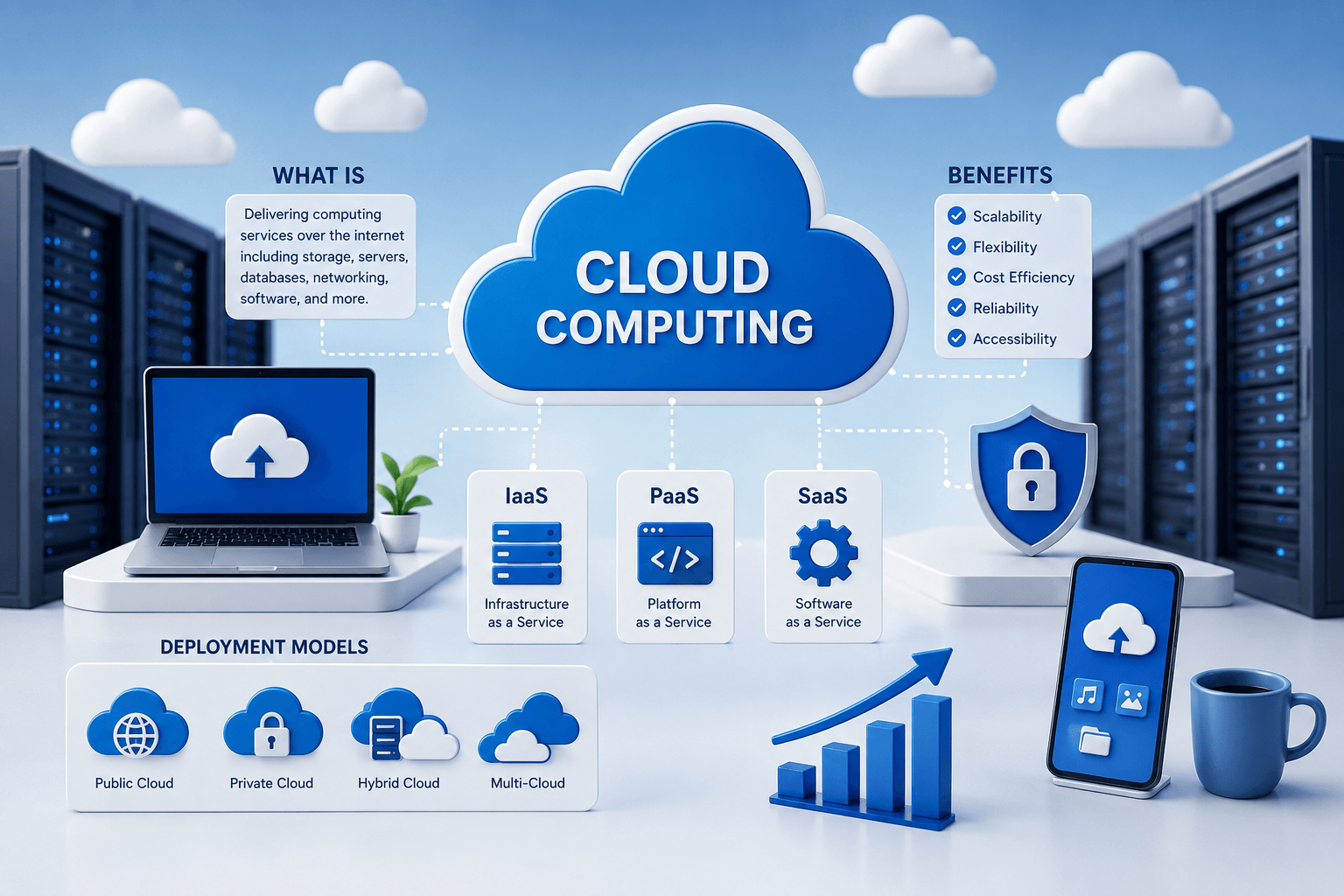
At its core, cloud computing means using computing resources — storage, processing power, software, networking — over the internet instead of relying entirely on your own physical hardware. Instead of buying a server, installing it in an office, and maintaining it yourself, you rent that capability from a provider who manages the heavy lifting for you.
Think about how people used to buy music. You’d purchase a CD, own it physically, and store it somewhere. Streaming changed that completely. You no longer own the file; you just access it whenever you need it. Cloud computing works on a similar principle, except instead of songs, it’s applied to servers, databases, storage, and entire computing environments.
This droven.io cloud computing guide focuses on that shift in thinking. Cloud computing isn’t really about servers sitting in a data center somewhere. It’s about flexibility — the ability to get exactly the resources you need, exactly when you need them, without upfront investment or long setup times.
Why Businesses Moved Toward the Cloud
Traditional infrastructure created real limitations. If a business wanted to scale up, it had to buy new hardware, install it, configure it, and wait. That process could take weeks or months, and by the time everything was ready, the original need may have already changed.
Cloud computing removed that bottleneck. Organizations can now spin up new computing environments in minutes rather than weeks. A startup testing a new idea doesn’t need to invest in physical servers before knowing whether the idea will even work. A growing company doesn’t need to predict future demand years in advance — it can simply scale resources up or down as circumstances change.
This is one of the central themes running through this droven.io cloud computing guide: agility. Businesses today operate in unpredictable conditions, and the ability to adjust computing resources on demand has become a genuine competitive advantage rather than a technical nicety.
The Three Main Cloud Service Models
Cloud services generally fall into three categories, and understanding the difference helps you avoid paying for more than you need — or choosing something that doesn’t fit your situation at all.
Infrastructure as a Service, usually shortened to IaaS, gives you the raw building blocks: virtual machines, storage, and networking. You manage everything above that layer yourself, including the operating system and applications. This model suits businesses with strong technical teams who want maximum control. Examples include AWS EC2, Google Compute Engine, and Azure Virtual Machines.
Platform as a Service, or PaaS, takes things a step further by managing the underlying infrastructure for you. Developers can focus purely on writing and deploying code without worrying about servers, patching, or runtime environments. This model is popular among development teams who want to move quickly without getting bogged down in operational details.
Software as a Service, or SaaS, is the model most people interact with daily, often without realizing it. Gmail, Slack, and Microsoft 365 are all SaaS products. You simply use the software through a browser, and the provider handles everything behind the scenes.
This droven.io cloud computing guide treats these three models as a spectrum of control versus convenience. The more control you want, the more responsibility you take on. The more convenience you want, the more you rely on the provider to handle the technical details.
Deployment Models: Public, Private, and Hybrid Cloud
Beyond service models, it helps to understand deployment models — essentially, where your cloud resources actually run.
Public cloud means your resources sit on shared infrastructure managed by a provider like AWS, Azure, or Google Cloud. It’s the most cost-effective option and the one most startups and small businesses choose, since there’s no need to manage physical hardware at all.
Private cloud gives an organization a dedicated environment, often preferred by industries with strict compliance requirements, such as banking or healthcare. It offers tighter control but usually comes at a higher cost.
Hybrid and multicloud setups combine multiple approaches. A business might keep sensitive data in a private environment while running less sensitive workloads on public cloud infrastructure. Many organizations also spread workloads across multiple providers to avoid depending too heavily on any single vendor. This droven.io cloud computing guide emphasizes that multicloud strategies offer real flexibility, but they also add complexity in areas like security monitoring and cost tracking, so they should be adopted thoughtfully rather than by default.
Choosing Between AWS, Azure, and Google Cloud
One of the most common questions people ask when getting started is which provider to choose. There’s no single correct answer here — it depends on your existing tools, your team’s skills, and what you’re trying to build.
AWS tends to offer the widest range of services and the most flexibility, making it a strong choice for companies that want maximum options. Azure often makes sense for organizations already invested in Microsoft’s ecosystem, since it integrates smoothly with tools many businesses already use. Google Cloud tends to stand out for data-heavy workloads, analytics, and machine learning projects.
Rather than chasing whichever provider seems most popular, it helps to match the platform to your actual workload and team capability. This is one of the more practical points covered throughout this droven.io cloud computing guide — the “best” provider is really just the one that fits your specific situation.
Understanding Cloud Costs and Avoiding Surprises
Cloud billing works differently than traditional infrastructure spending, and this catches a lot of people off guard. Costs are usage-based, meaning that if a resource is running, you’re paying for it, whether or not you’re actively using it.
Compute costs — the CPU and memory powering your workloads — are usually the biggest expense. Storage costs come next, covering everything from simple file storage to full databases. One cost that surprises many newcomers is data egress: moving data out of a cloud environment often costs significantly more than moving data in.
Managed services add convenience but come at a premium. A fully managed database, for example, can cost several times more than running the same database yourself. Setting budget alerts early on is one of the simplest ways to avoid unexpected bills, and most major providers include this feature at no extra cost.
Security Basics Every Cloud User Should Know
Security in the cloud follows a shared responsibility model. Providers secure the physical infrastructure and the core systems underneath, but customers remain responsible for configuring access controls, securing their own applications, and protecting their data.
Many security incidents happen not because of a flaw in the cloud provider’s systems, but because default settings were never changed or access permissions were too broad. Strong password practices, multi-factor authentication, encryption, and regular monitoring go a long way toward reducing risk. Reviewing security settings before deploying anything new is a habit worth building early, rather than something to fix after a problem occurs.
Where Cloud Computing Is Headed
Cloud technology continues to evolve, and a few trends are shaping where things go next. Edge computing is bringing processing closer to where data is generated, which improves speed for applications like autonomous vehicles, smart devices, and real-time analytics. Serverless computing continues gaining traction because it lets developers focus entirely on code rather than server management. Sustainability is also becoming a bigger factor, as organizations look for more energy-efficient ways to run their infrastructure. Sustainability is also becoming a bigger factor, as organizations look for more energy-efficient ways to run their infrastructure and adopt smarter technology solutions for modern businesses.
Artificial intelligence is increasingly built directly into cloud platforms, helping teams detect issues before they affect users and automating tasks that once required constant manual attention. This droven.io cloud computing guide points to these shifts as evidence that cloud computing isn’t a static technology — it keeps adapting to what businesses actually need.
Bringing It All Together
Cloud computing has moved from a niche technical concept to a foundational part of how modern organizations operate. Understanding the basics — service models, deployment options, cost structures, and security responsibilities — gives you the confidence to make better decisions, whether you’re launching a small project or planning enterprise-level infrastructure.
This droven.io cloud computing guide was built around one simple idea: cloud computing doesn’t need to feel intimidating. Once you understand what’s actually happening behind the scenes, the decisions become much easier to navigate. If you’re interested in exploring another popular comfort food, check out our guide on Best Tarta de Choclo Near Me, where you’ll discover the history, flavors, and best places to enjoy this traditional South American corn pie.
Frequently Asked Questions
Is cloud computing secure? Yes, when configured properly. Most providers offer strong built-in security tools, but customers are still responsible for managing access controls and following good security practices.
How much does cloud computing cost?
It depends entirely on usage. Small projects might cost only a few dollars a month, while large enterprise workloads can scale into significant ongoing expenses based on compute, storage, and data transfer needs.
Can beginners use cloud platforms without technical experience?
Many cloud services are designed to be approachable, allowing users to launch simple projects and gradually learn more advanced techniques over time. Many cloud services are designed to be approachable, allowing users to launch simple projects and gradually learn more advanced techniques over time. Beginners can also explore helpful online learning resources to improve their understanding.
What happens if my internet connection goes down?
You may lose temporary access to cloud-based tools and data, but access typically returns as soon as the connection is restored, since your data itself remains stored safely on the provider’s servers.
Which cloud provider should I choose?
It depends on your needs. AWS offers the broadest range of services, Azure works well for Microsoft-based organizations, and Google Cloud is often preferred for data and AI-focused workloads.
Do I need to choose only one cloud provider?
No. Many organizations use a multicloud approach, combining providers to avoid dependency on a single vendor, though this does add some operational complexity.